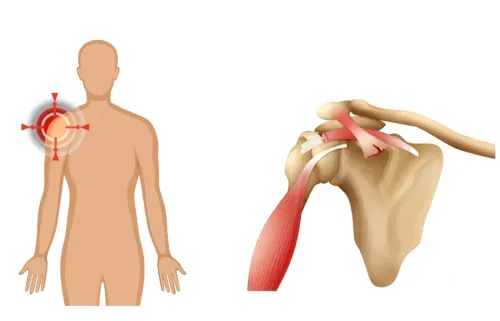
Shoulder pain can make simple activities surprisingly difficult. Dressing, reaching a shelf, combing hair, lifting household objects, or sleeping comfortably can become challenging when joint damage progresses.
Many shoulder conditions can be treated without replacement. However, when substantial joint damage causes persistent pain and restricted function despite appropriate conservative treatment, evaluation by a shoulder replacement surgeon may be considered.
For patients in Chembur, knowing when replacement deserves discussion can help distinguish advanced joint disease from shoulder problems that may be treated through rehabilitation or other procedures.
What Is Shoulder Replacement?
Shoulder replacement surgery involves replacing damaged joint surfaces with prosthetic components.
The shoulder is formed where the ball-shaped upper end of the humerus meets the socket of the shoulder blade. When these surfaces become severely damaged, movement may become painful and restricted.
Replacement aims to address pain and functional limitation caused by significant joint deterioration, but the exact procedure depends on the condition of the joint and surrounding structures.
What Symptoms May Lead to Evaluation?
Patients may seek specialist assessment when they experience:
- Persistent deep shoulder pain
- Significant restriction of movement
- Pain that interferes with sleep
- Difficulty with dressing or grooming
- Reduced ability to lift the arm
- Grinding or stiffness during movement
- Increasing dependence on pain medication
- Limited improvement despite appropriate conservative treatment
These symptoms do not automatically mean replacement is required. Rotator cuff injuries, frozen shoulder, instability, neck-related problems, and other conditions can produce overlapping symptoms.
Diagnosis comes first.
Which Conditions Can Lead to Shoulder Replacement?
Replacement may be considered for selected patients with substantial structural joint damage.
Possible indications can include advanced arthritis, certain complex fractures, severe joint deterioration associated with rotator cuff dysfunction, and other conditions in which the joint surfaces are significantly compromised.
The type of replacement is determined by the underlying problem rather than patient preference alone.
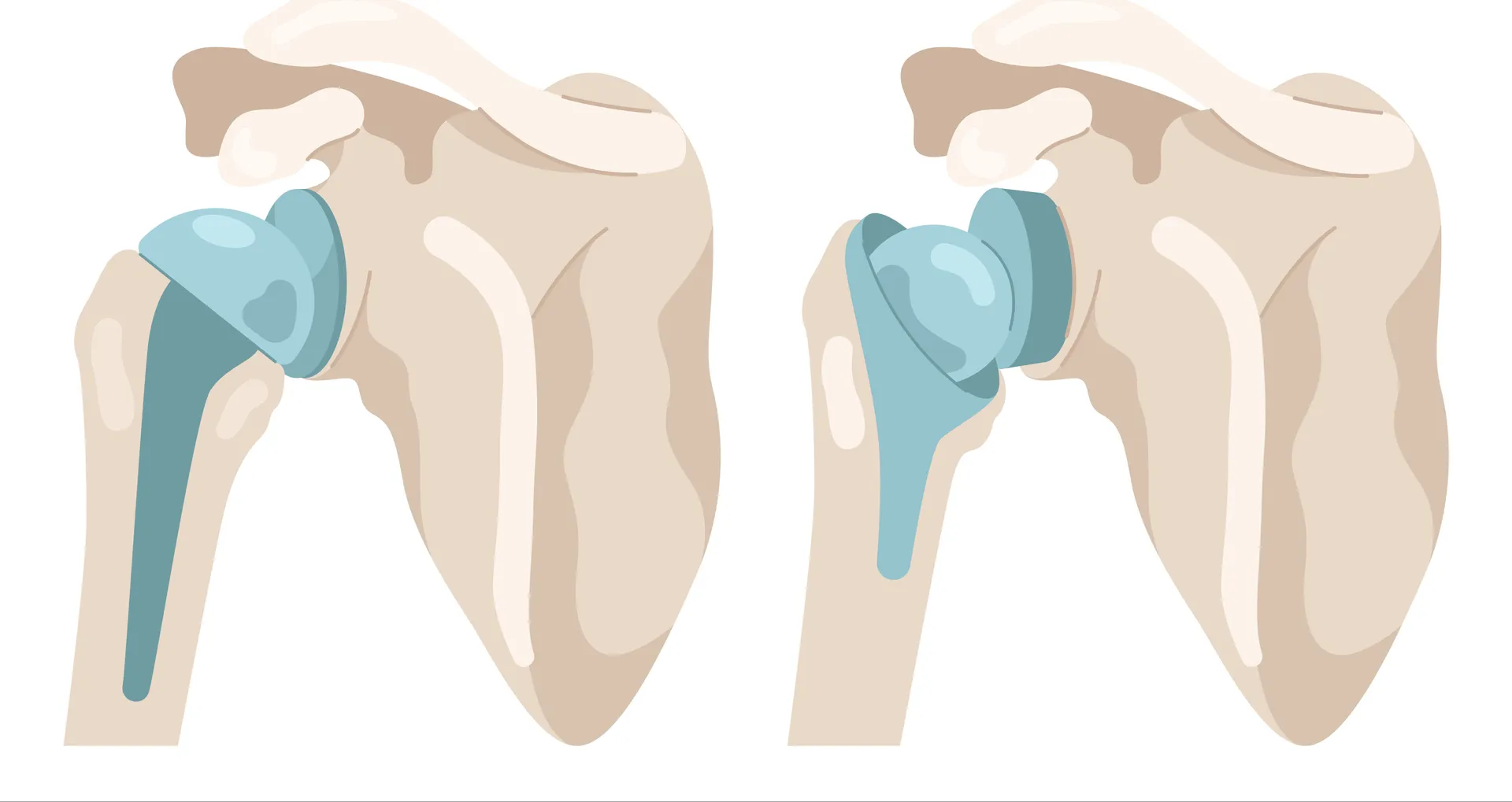
Anatomic and Reverse Replacement Are Different
In an anatomic shoulder replacement, the artificial components broadly reproduce the natural ball-and-socket arrangement. This approach generally relies on a functioning rotator cuff to support shoulder mechanics.
A reverse shoulder replacement changes the joint configuration so that other muscles, particularly the deltoid, can contribute differently to arm elevation. It may be considered in selected situations where rotator cuff function is severely compromised or for other specific indications.
A shoulder replacement surgeon determines suitability after evaluating the joint, rotator cuff, bone quality, symptoms, and functional needs.
What Should Be Tried Before Replacement?
When medically appropriate, non-surgical management may include:
- Activity modification
- Physiotherapy
- Medication
- Guided exercises
- Selected injections
- Adjustments to activities that repeatedly aggravate symptoms
The duration and type of conservative treatment depend on the diagnosis and severity of symptoms.
Replacement is generally discussed when joint damage and functional limitation are substantial enough that conservative measures no longer provide adequate relief.
What Tests Are Usually Needed?
X-rays are particularly important for assessing arthritis, joint shape, bone changes, and loss of joint space.
Additional imaging may be recommended when the surgeon needs more information about bone anatomy, rotator cuff integrity, or other structures.
The patient's general health and suitability for surgery also need consideration before an operation is planned.
Recovery Is a Gradual Process
Shoulder replacement does not produce full function immediately after surgery.
Early recovery focuses on protecting healing tissues and managing discomfort. Movement is gradually introduced according to the procedure and surgeon's protocol.
Later rehabilitation typically works toward improving:
- Range of motion
- Muscle function
- Shoulder control
- Ability to perform everyday activities
Patients should also discuss realistic expectations about lifting, work, exercise, and long-term activity after replacement.
For individuals considering consultation with a shoulder replacement surgeon in Chembur, Dr. Shreya Joshi can assess the cause and severity of shoulder dysfunction and discuss whether conservative care, another surgical approach, or replacement is appropriate. The decision should be based on the condition of the joint, the impact of symptoms, and realistic functional goals rather than pain alone.
Keywords