


A first shoulder dislocation can be frightening, but the longer-term concern is whether the joint remains stable afterward. Some people recover well following reduction plus rehabilitation. Others develop repeated dislocations, partial slipping episodes, plus persistent fear during overhead movement.
Patients researching surgeries for shoulder dislocation in Chembur usually want to know when recurrent instability has reached the point where surgical stabilization should be considered.
Why Does a Shoulder Keep Dislocating?
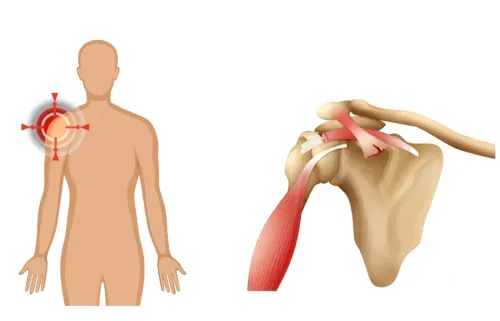
The shoulder achieves exceptional mobility because its ball-shaped upper arm bone moves against a relatively shallow socket.
This mobility depends on stabilizing structures such as the labrum, capsule, ligaments, plus surrounding muscles.
During a traumatic dislocation, one or more of these structures can be damaged. Bone loss may also occur in some cases.
If these stabilizers fail to recover adequately, the shoulder may remain vulnerable during sports, lifting, throwing, plus certain everyday movements.
Signs of Persistent Instability
Instability does not always mean a complete dislocation.
Symptoms can include
- Repeated full dislocations
- Partial slipping episodes
- Apprehension during overhead movement
- Feeling that the shoulder may come out
- Pain during throwing
- Reduced confidence during sport
- Weakness after previous dislocation
These symptoms warrant assessment, particularly when episodes become recurrent.
What Determines Whether Surgery Is Needed?
Several factors influence treatment.
A doctor considers the patient's age at first dislocation, number of instability episodes, sporting demands, occupational requirements, examination findings, plus structural damage visible on imaging.
The amount of bone loss can be particularly important because it may influence which stabilization technique is suitable.
This is why treatment should not be selected based solely on the number of dislocations.
What Can Imaging Show?
X-rays can identify alignment plus certain bone injuries. MRI can help assess labral, capsular, ligament, plus other soft-tissue damage.
Additional imaging may be requested when detailed assessment of bone loss is necessary.
The surgeon combines these findings with physical examination rather than relying on imaging alone.
Surgical Stabilization
Selected instability problems can be treated arthroscopically using small portals around the shoulder. Damaged stabilizing tissue may be repaired plus tightened according to the injury pattern.
Cases involving significant bone loss or other structural concerns may require a different stabilization approach.
The correct procedure therefore depends on the anatomy of the injury.
Rehabilitation After Stabilization
The repaired shoulder needs protection during early healing.
Rehabilitation gradually restores movement before progressing toward strength, control, plus sport-specific function.
Throwing athletes plus people involved in contact sports usually require more advanced rehabilitation before returning to unrestricted participation.
Trying to regain full movement too aggressively during early recovery can place unnecessary stress on healing structures.
When to Seek Specialist Assessment
Repeated shoulder instability should not be treated as merely inconvenient. Every new episode can potentially cause additional soft-tissue or bone damage.
Dr. Shreya Joshi evaluates recurrent shoulder instability through clinical examination, imaging, activity assessment, plus review of previous dislocation episodes. For patients considering shoulder dislocation surgery in Chembur, Maharashtra, this helps identify the specific reason the joint remains unstable.
Treatment should aim for more than preventing another emergency visit. The broader goal is restoring dependable shoulder stability, confidence during movement, plus safe participation in the activities important to the patient.